Serene Path Travels
Sacred Sites SOLOSMASTHĀNA · AṬAMASTHĀNA · AND THE REST

Sixteen places,
one island.

The Solosmasthāna are the sixteen sites the Sinhala tradition holds the Buddha himself consecrated on his three visits to Laṅkā. Six of them stand inside a single city. This page is what is actually there, and how pilgrims approach it.

The sixteen SOLOSMASTHĀNA

The Solosmasthāna

Numbered as the tradition numbers them, not as you would drive them. Six — numbers nine to fourteen — are inside Anurādhapura and are listed together.

01

Mahiyaṅgana Rāja Mahā Vihāra

The first visit — nine months after the enlightenment

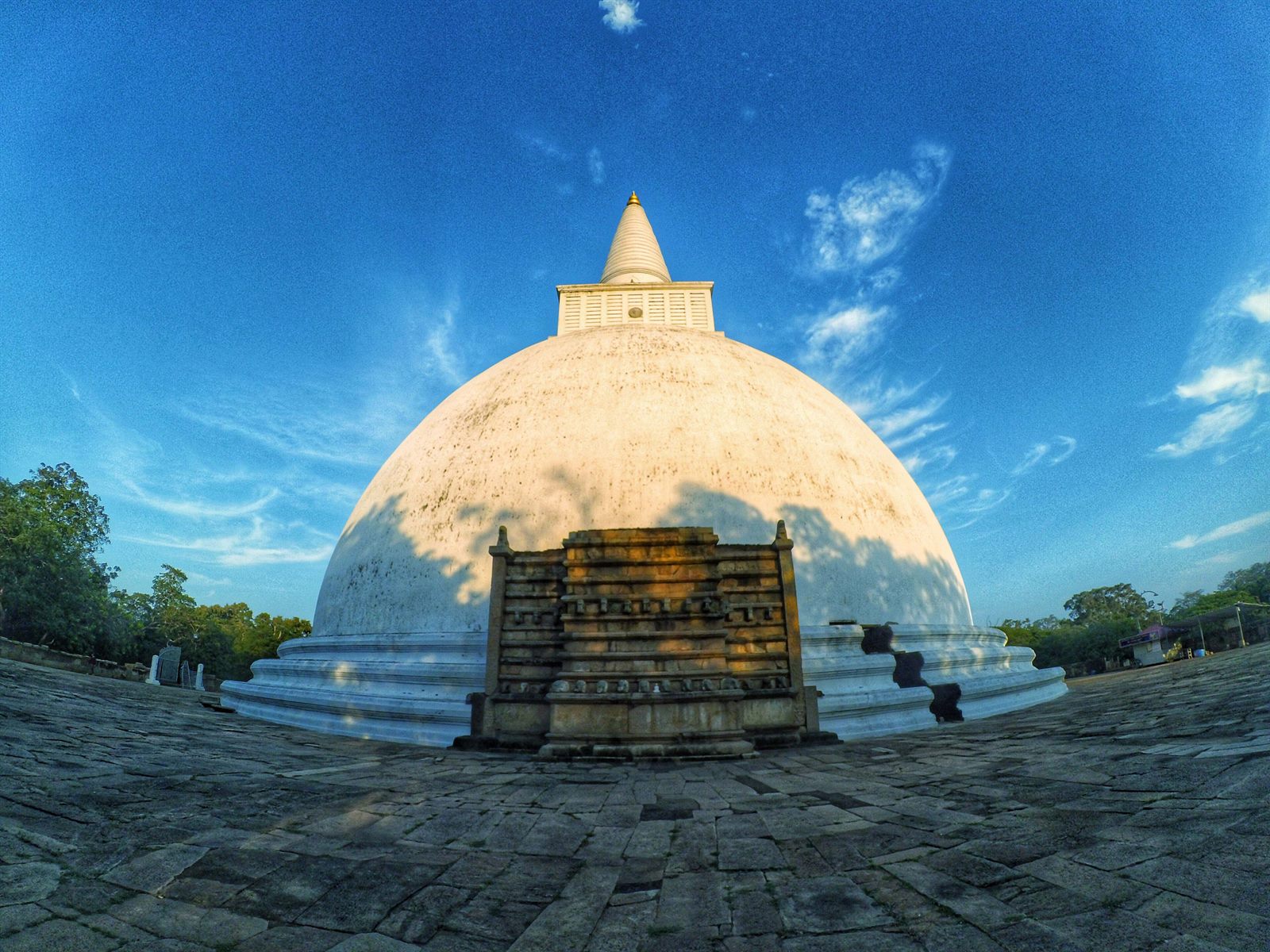
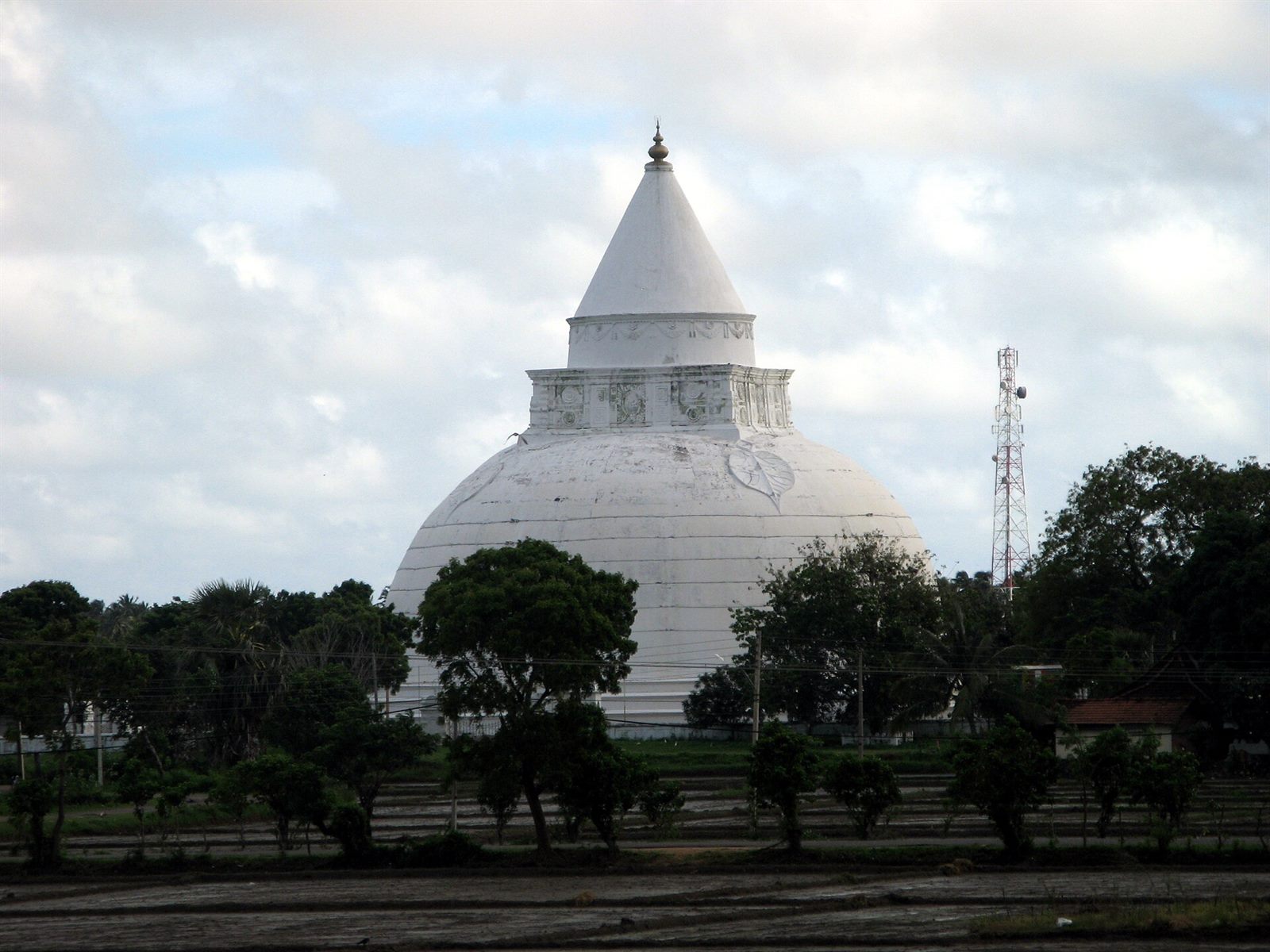
On the bank of the Mahaweli in Uva, this is where the Buddha is held to have first set foot on the island, to a gathering of yakkhas, and where the deity Sumana — Saman, of Sumanakūṭa — received a handful of hair relics. The stūpa that grew over them has been enlarged many times and is now bright white and very large. It is a busy, unpretentious, entirely local place of worship, and almost no foreign visitors ever come.

Uva ProvinceHair relicVisited on: Solosmasthāna, Dāna
02

Nāgadīpa Purāna Vihāra, Nainativu

The second visit — five years after the enlightenment

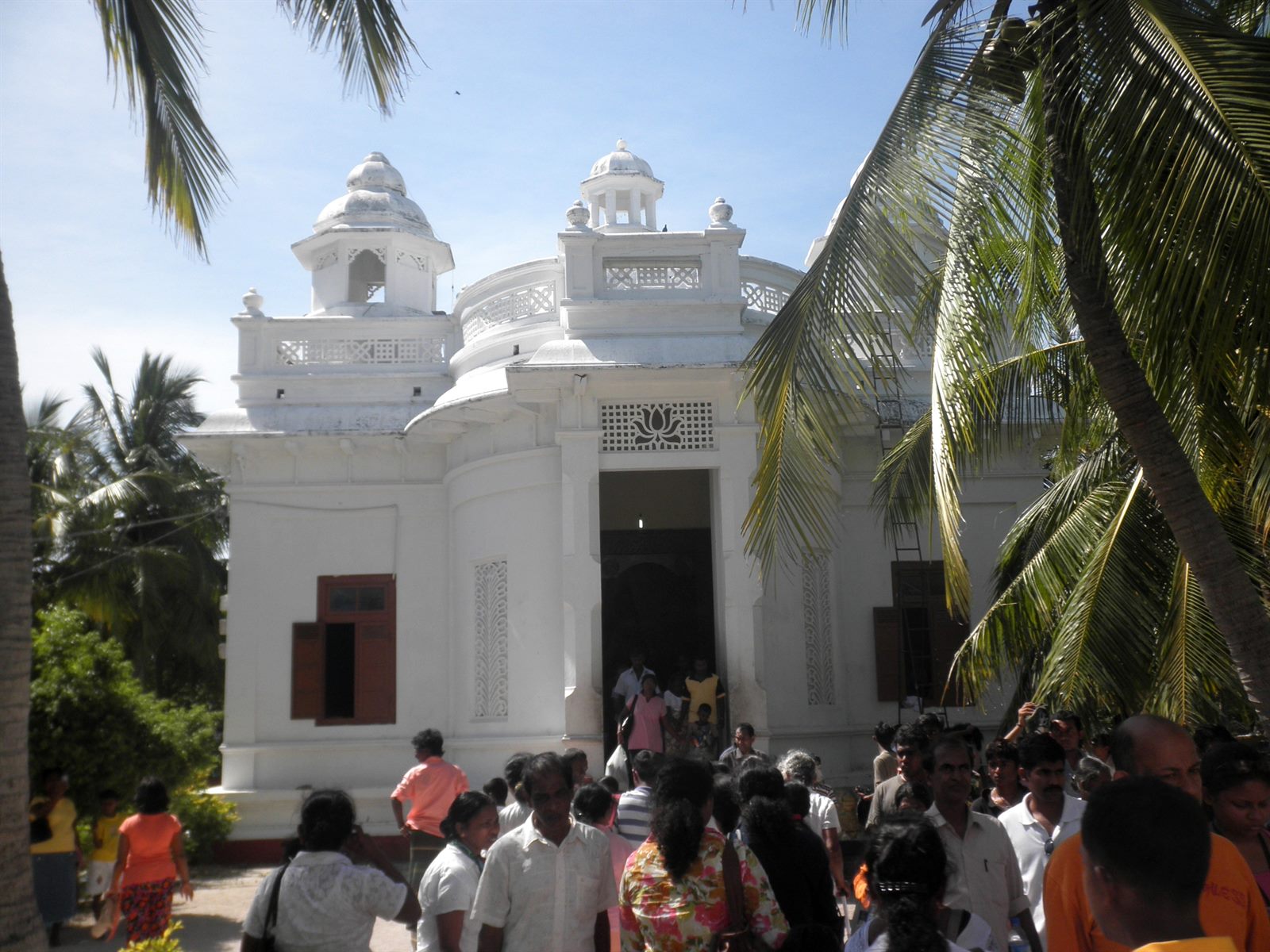
An island off the Jaffna peninsula, reached by a short ferry from Kurikadduwan, where the Buddha is said to have come to prevent a war between two nāga kings, uncle and nephew, over a gem-encrusted throne. The present vihāra is modern and silver-blue, rebuilt after the civil war. The crossing, the wind, and the Hindu Nagapooshani Amman temple a few hundred metres away make this the most unusual of the sixteen.

Northern ProvinceFerry crossingVisited on: Solosmasthāna
03

Kelaniya Rāja Mahā Vihāra

The third visit — eight years after the enlightenment

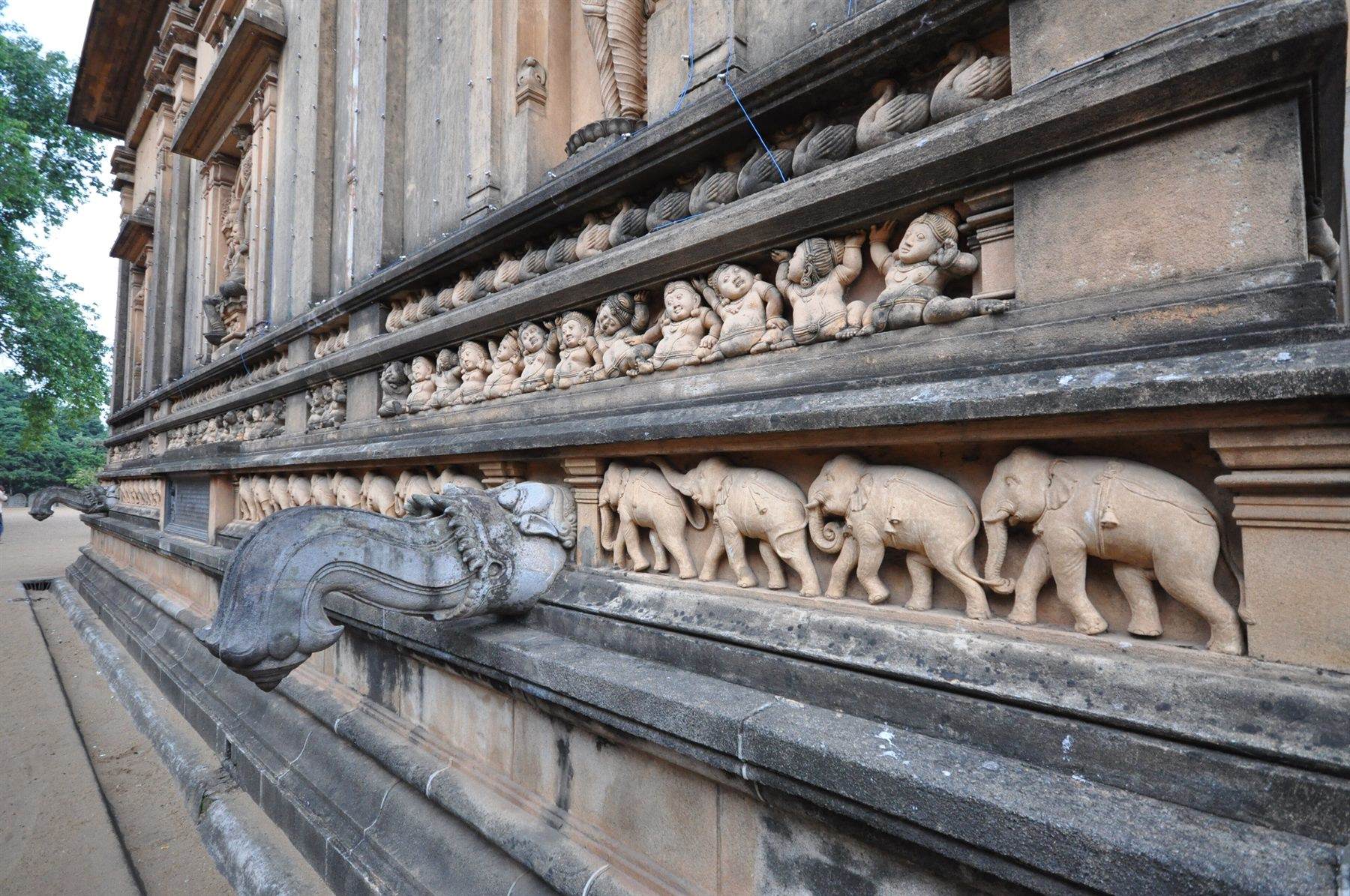
Eleven kilometres from Colombo on the Kelani river, at the invitation of the nāga king Maṇiakkhika. The temple is famous for two things beyond its antiquity: the extraordinary twentieth-century mural cycle by Solias Mendis, which deliberately drew on Ajanta and on Sinhalese sources to make a self-consciously national Buddhist art, and the Duruthu Perahera in January. Because it is close to the airport, it is usually the first or last of the sixteen you will see.

Western ProvinceSolias Mendis muralsVisited on: Solosmasthāna, Śrī Pāda, Dāna
04

Śrī Pāda — Adam's Peak

Samanaḷa Kanda · 2,243 m

A hollow in the rock at the summit, about a metre and a half long, venerated by Buddhists as the Buddha's footprint, by Hindus as Śiva's, and by Muslims and some Christians as Adam's. Pilgrims climb roughly 5,500 steps through the night in the season between Unduvap Poya (December) and Vesak Poya (May), when the stairway is lit and lined with tea stalls. At dawn, when the air is clear, the peak throws a perfect triangular shadow onto the cloud to the west.

Sabaragamuwa / Central~5,500 stepsVisited on: Solosmasthāna, Śrī Pāda, Forest Retreat
05

Divāguhāwa — Batatotalena

The cave of the day-stay

A cave temple near Kuruwita, on the old Ratnapura approach to the peak, where the Buddha is held to have spent a day in meditation on the journey to Śrī Pāda — hence the name, "day cave". It is a working village temple in a cave mouth with a reclining Buddha and a few monks, and it is the least visited of the sixteen after Dīghavāpi. Archaeologically the same cave has produced prehistoric human remains.

SabaragamuwaCave templeVisited on: Solosmasthāna, Śrī Pāda
06

Dīghavāpi

The long tank

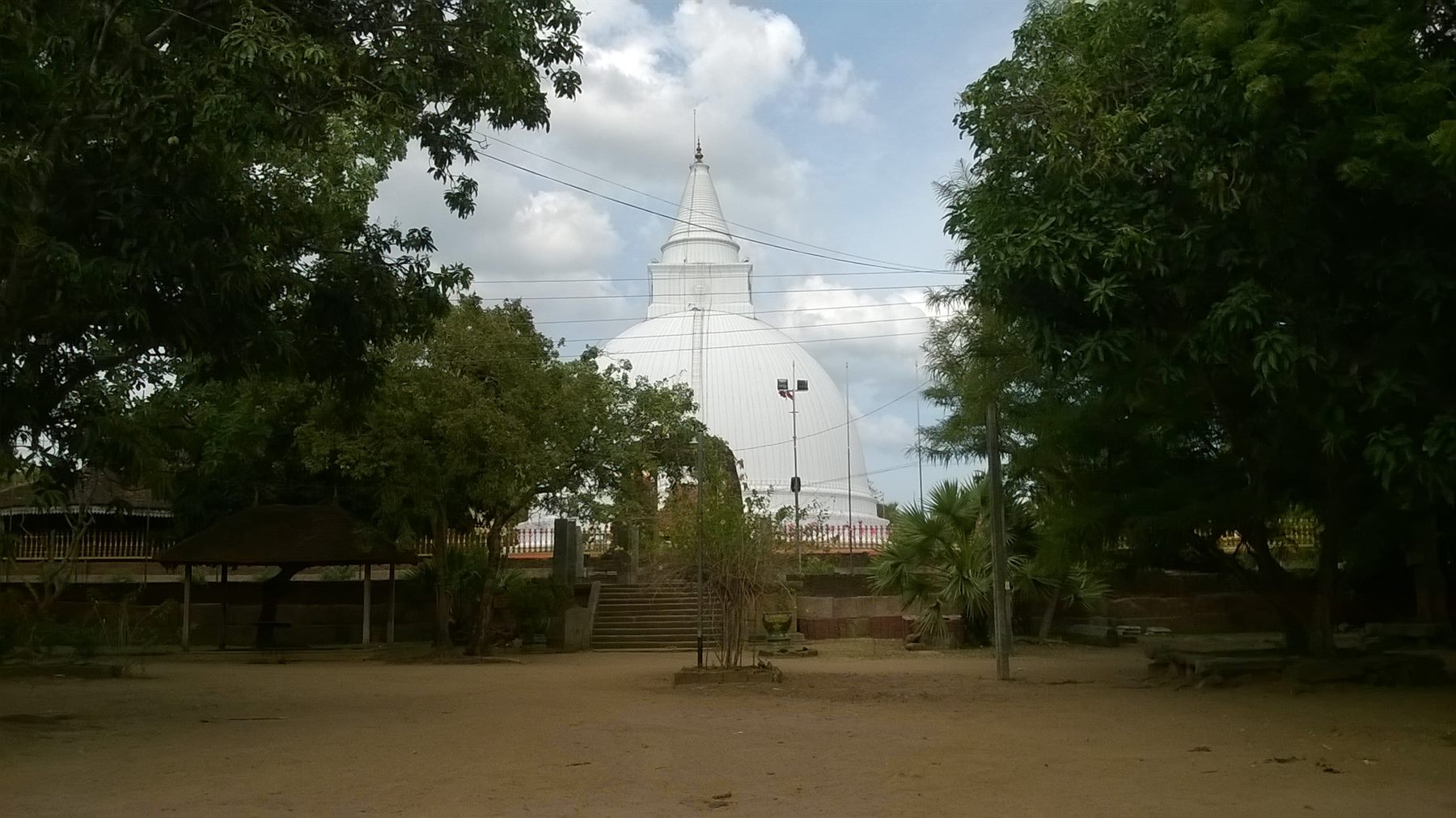
In Ampara district in the east, where the Buddha is held to have meditated on his third visit, and where a stūpa was raised in the second century BCE — the chronicles associate the Dīghavāpi district with Prince Saddhātissa. It is the quietest and most rural of the sixteen — a low dāgaba among paddy and scrub, with none of the infrastructure of the famous sites. Pilgrims who complete the Solosmasthāna often say this is the one they remember, precisely because there is nothing there but the place itself.

Eastern ProvinceAmpara districtVisited on: Solosmasthāna
07

Muthiyaṅgana Rāja Mahā Vihāra, Badulla

The pearl-sand stūpa

In the middle of Badulla town, up in the hills at 680 metres, where the Buddha is held to have preached on the return from Mahiyaṅgana at the request of the local ruler Indaka. The name refers to the pearl-like sand said to have appeared at the spot. It is an active town temple with a large white stūpa, and the hill-country setting is a complete change from the dry-zone sites.

Uva Province680 mVisited on: Solosmasthāna, Dāna
08

Tissamahārāma Rāja Mahā Vihāra

Rohana · the southern kingdom

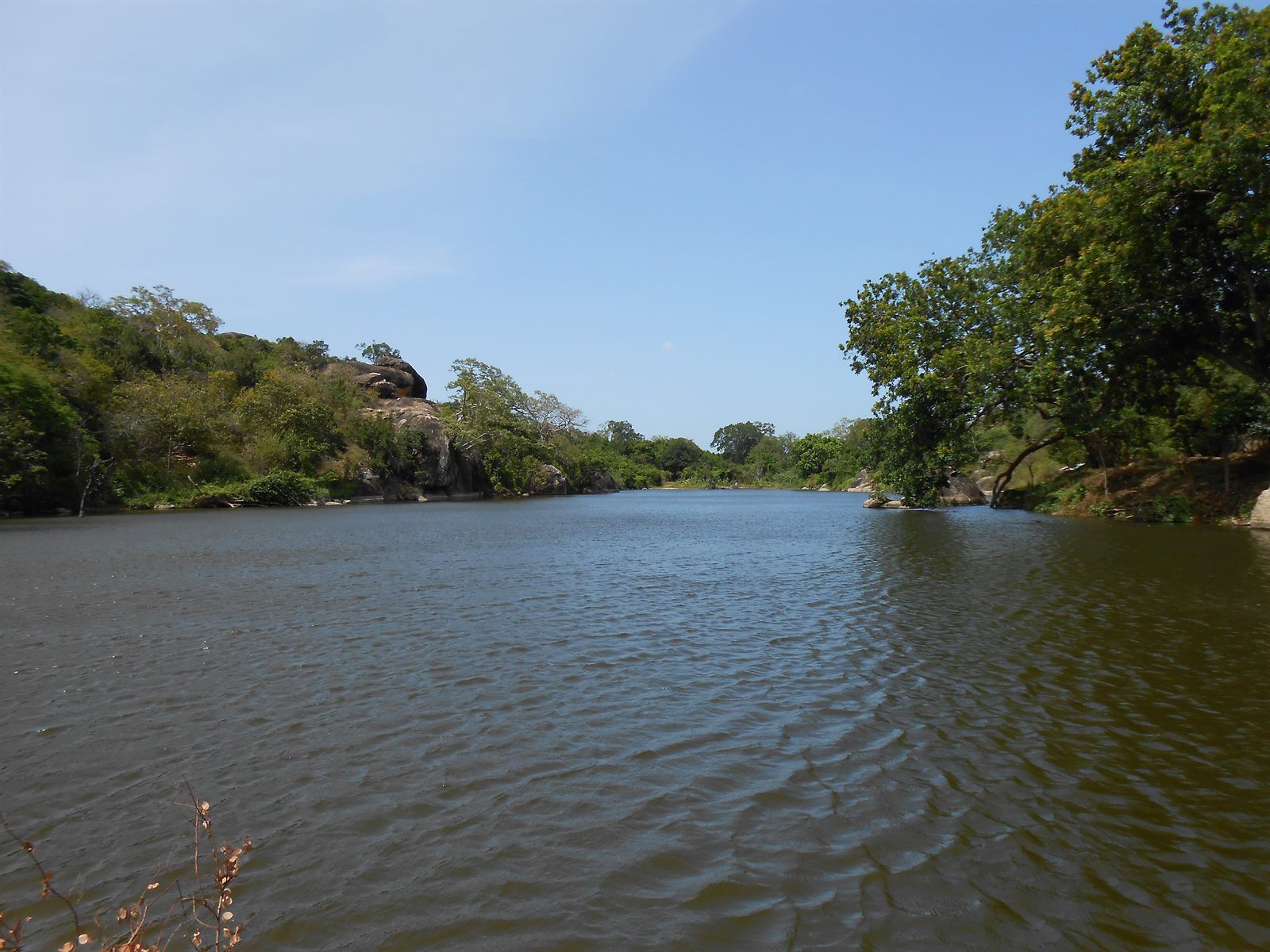
The great dāgaba of the old southern capital of Rohana, founded in the third century BCE by King Mahānāga and said to enshrine a forehead bone relic. Tissamahārāma was one of the earliest and most important monastic centres on the island — the Mahāvihāra of the south — and the tank beside it is full of birds at dusk. It is the natural base for the deep south and for Kataragama.

Southern ProvinceForehead relicVisited on: Solosmasthāna
09–14

Anurādhapura — six of the sixteen, and all eight of the Aṭamasthāna

Capital of the island for thirteen centuries

Six of the Solosmasthāna stand inside the sacred precinct of Anurādhapura, and the same precinct holds the Aṭamasthāna — the eight sacred places — as a pilgrimage in its own right. The city was the capital from the fourth century BCE to the eleventh century CE and was the largest monastic settlement in the Buddhist world.

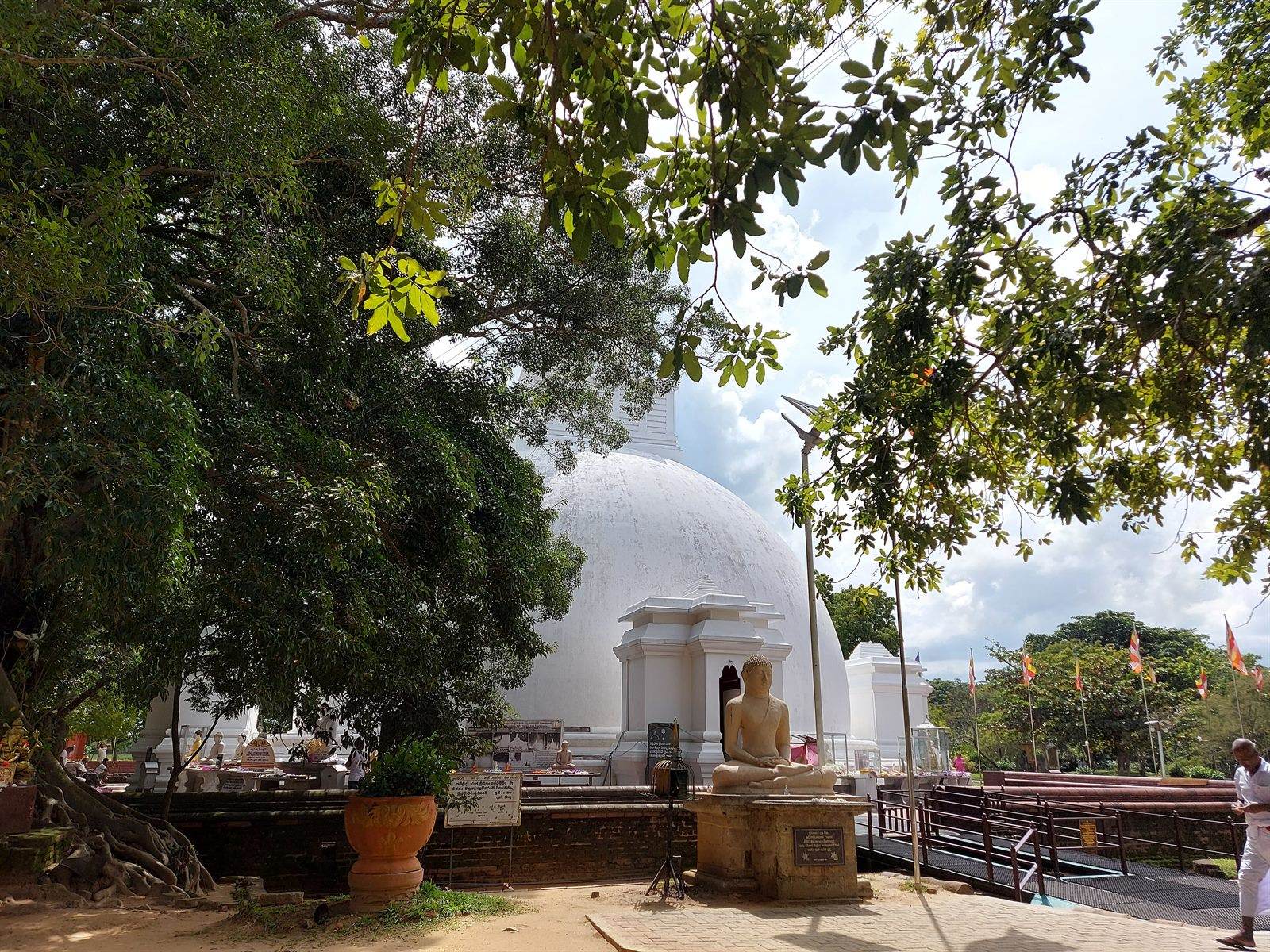
  • 09 · Jaya Sri Mahā Bodhi — grown from a cutting of the Bodh Gayā tree, brought by the bhikkhunī Saṅghamittā in the third century BCE and tended continuously since. The oldest human-planted tree on earth with a recorded planting date.
  • 10 · Mirisawetiya — raised by Duṭugämuṇu in expiation for eating a chilli curry without first offering a share to the Saṅgha.
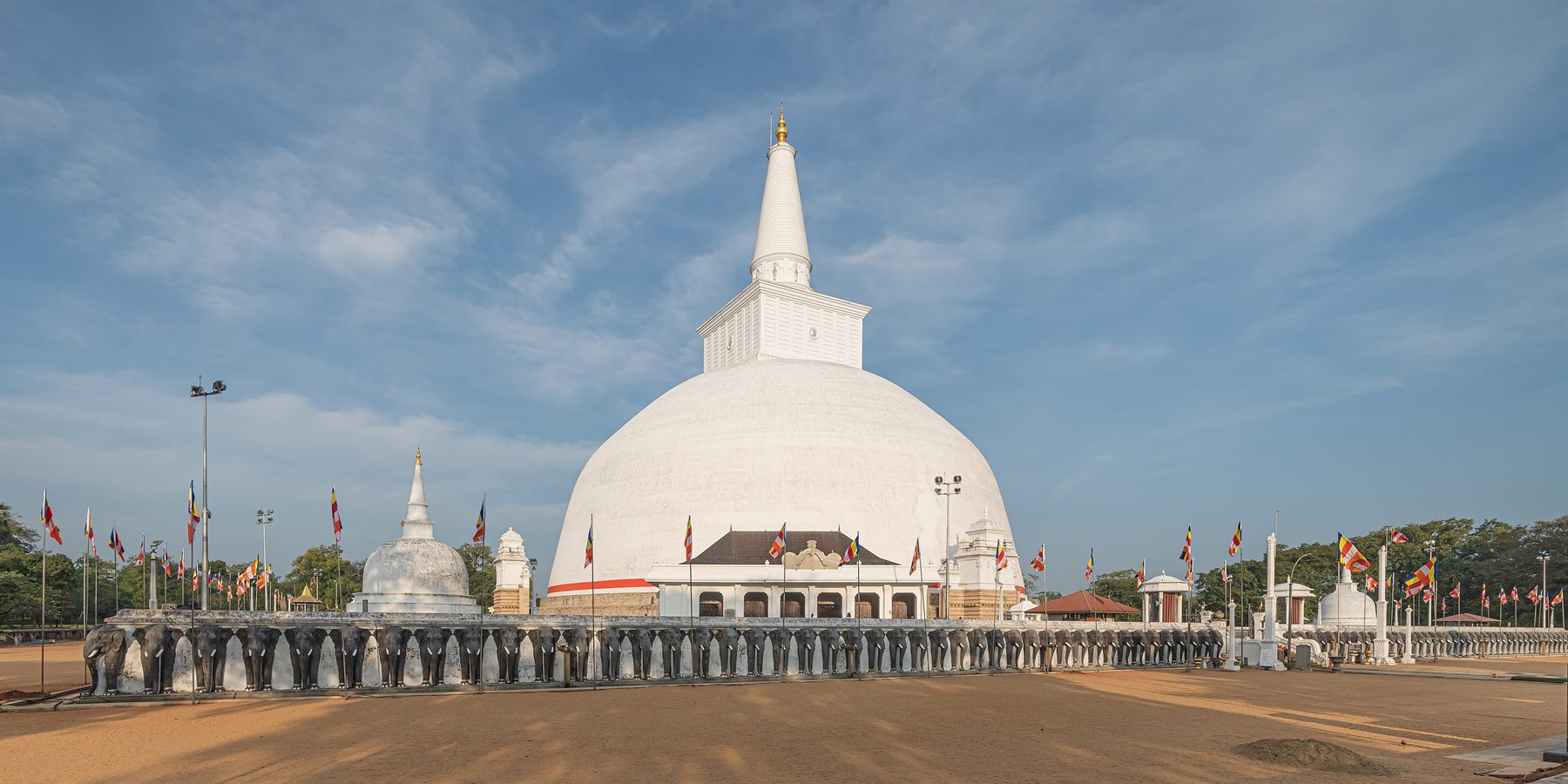
  • 11 · Ruwanwelisāya — the Mahā Thūpa, Duṭugämuṇu's great dome, its terrace ringed with hundreds of carved elephants.
  • 12 · Thūpārāmaya — the first stūpa built in Sri Lanka, enshrining the right collarbone relic, still surrounded by the slender pillars of its vanished vaulted house.
  • 13 · Abhayagiri — the great northern monastery, five thousand monks at its height, with the Samādhi Buddha, the twin ponds of Kuttam Pokuna and the finest sandakaḍa pahaṇa moonstone on the island.
  • 14 · Jetavanārāmaya — a brick dome that on completion was the third tallest structure anywhere on earth.

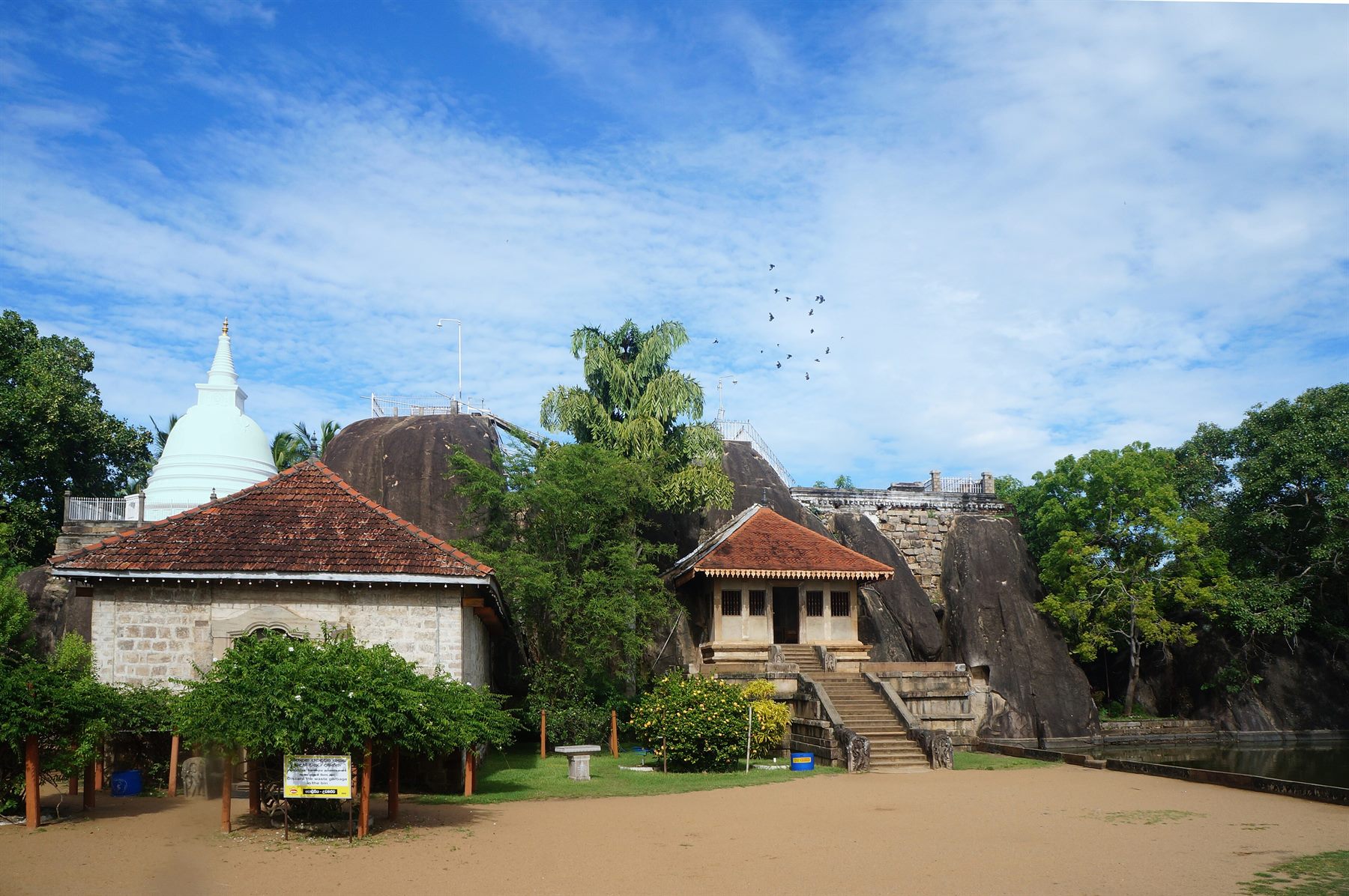
The remaining Aṭamasthāna are Lovāmahāpāya, the Brazen Palace, whose sixteen hundred stone columns supported a nine-storey monastic residence, and Lankārāmaya, a small quiet stūpa that most visitors never reach. Nearby: Isurumuniya, cut into rock beside a bathing tank and holding the island's most famous carved panel.

North Central ProvinceUNESCO World HeritageVisited on: Aṭamasthāna, Solosmasthāna, Mihintale, Forest Retreat
15

Mihintale — the Sela Cetiya

Missaka Pabbata · c. 247 BCE

The hill where Arahant Mahinda, son of the emperor Asoka, met King Devānampiya Tissa while the king was hunting, tested his capacity for inference with a series of questions about a mango tree, and then taught him the Dhamma. It is the founding site of Sri Lankan Buddhism. The chronicles place the mission 236 years after the Buddha's parinibbāna, which is about 247 BCE. The ascent is 1,840 broad granite steps past the Ambasthala Dāgaba, built where the meeting took place, the Mahinda Guhāva cave, and the Sela Cetiya on the summit rock. The lower terraces hold the Kaludiya Pokuna forest monastery and the ruins of what is often called the world's oldest hospital, with its stone medicinal immersion trough.

North Central Province1,840 stepsVisited on: Aṭamasthāna, Solosmasthāna, Mihintale
16

Kirivehera, Kataragama

The milk-white stūpa

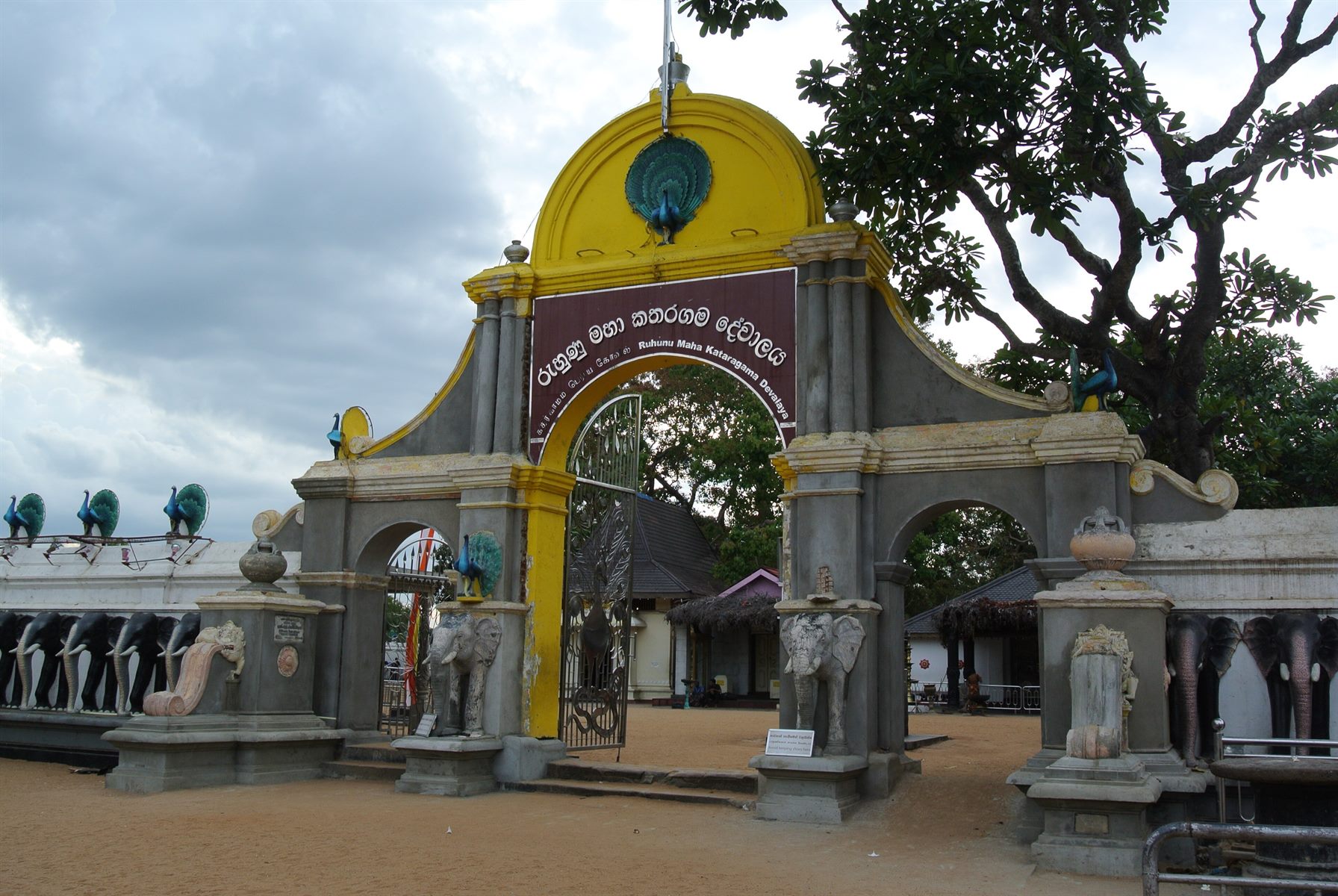
The last of the numbered sixteen, in the deep south-east, said to have been built by King Mahāsena on the spot where the Buddha preached. Kataragama is one of the most extraordinary religious sites in South Asia: Buddhists, Hindus, Muslims and the indigenous Vedda all worship within the same precinct, pilgrims wash in the Menik Ganga before entering, and the Esala festival in July and August brings fire-walking and kavadi. Kirivehera itself, a few hundred metres from the crowded Ruhunu Maha Kataragama devālaya, is calm and white and usually quiet.

Uva ProvinceMulti-faith precinctVisited on: Solosmasthāna
Other sacred ground NOT NUMBERED, NOT LESSER

The places that are not on the list

Several of the most important Buddhist sites in Sri Lanka are not among the sixteen, for the simple reason that they were founded after the visits the sixteen commemorate.

Sri Dalada Māligāwa, Kandy

The Temple of the Sacred Tooth Relic

The tooth relic of the Buddha has been in Sri Lanka since the fourth century CE, and possession of it has been treated as the right to rule the island ever since. It has been moved, hidden, fought over, and finally housed in this eighteenth-century complex beside the lake in Kandy. The Thevāva pūjā is performed three times a day, announced by drummers, and the Esala Perahera in July and August is the largest Buddhist procession in the world. This is the single most important active Buddhist site in the country.

Central ProvinceUNESCO World HeritageVisited on: Mihintale, Śrī Pāda, Dāna, Forest Retreat

Raṅgiri Dambulla Vihāra

The Golden Rock cave temple

Five caves under a single granite overhang, occupied by monks since the first century BCE and painted and repainted for two thousand years. There are some 150 statues — 153 of them images of the Buddha — and around 2,100 square metres of painting, applied directly to the rock so that the ceiling of Cave 2 follows every bulge and hollow of the stone above your head. It is the best-preserved cave-temple complex in South Asia and it is still a working monastery.

Central ProvinceUNESCO World HeritageVisited on: Mihintale, Dāna, Forest Retreat

Polonnaruwa and Gal Vihāra

The second capital · twelfth century

Anurādhapura's successor, and the high point of Sinhalese sculpture. At Gal Vihāra four figures — a seated Buddha in samādhi, a second seated figure in a vaulted recess, a seven-metre standing figure with folded arms, and a fourteen-metre reclining Buddha entering parinibbāna — were cut from one continuous face of granite in the reign of Parākramabāhu I. They are in the open air and they are extraordinary.

North Central ProvinceUNESCO World HeritageVisited on: Solosmasthāna, Mihintale

Ritigala Forest Hermitage

Pansukūlika · the rag-robe ascetics

A ridge rising six hundred metres out of flat dry-zone scrub, and the most complete surviving āraññaka hermitage on the island. The Pansukūlika monks who built it had broken away from the wealth of the great city monasteries, and what they left is austere and strange: long straight stone meditation walkways, double-platform cells, rock-cut ponds, and no shrine rooms or images at all. It sits inside a strict nature reserve and is almost always empty.

North Central ProvinceStrict nature reserveVisited on: Mihintale, Forest Retreat

The Aukana Buddha

Abhaya mudrā · fifth century

A twelve-metre standing Buddha in abhaya mudrā, the gesture of fearlessness, carved from a single face of living granite and still joined to the rock behind it by a narrow strip of stone. The proportions and the wet-cloth treatment of the robe are as good as anything in South Asia. It is beside a tank in open country and there is nothing else there.

North Central Province12 mVisited on: Aṭamasthāna, Mihintale

Sīgiriya and Pidurangala

Sīhagiri · the lion rock

Kassapa's fifth-century citadel on a two-hundred-metre granite plug, with the frescoes, the mirror wall and the lion's paws. It was a monastery both before Kassapa and for a long time after him, and the adjoining rock of Pidurangala holds a large reclining Buddha and gives the better view — of Sīgiriya itself — for a fraction of the ticket price.

Central ProvinceUNESCO World HeritageVisited on: Mihintale

Somawathiya Chaitya

A stūpa on the Mahaweli floodplain enshrining a right tooth relic, founded in the second century BCE and named for Princess Somāwathi. It stands inside Somawathiya National Park, so wild elephants are a genuine consideration on the approach road, and the pilgrimage on Poya days is large and entirely local.

Eastern ProvinceRight tooth relicVisited on: Solosmasthāna

Seruwila Mangala Rāja Mahā Vihāra

Between Trincomalee and the Mahaweli, built by King Kāvantissa in the second century BCE and likewise associated with a forehead relic. It was lost to the jungle for centuries and rediscovered in the 1920s. Reaching it involves a long detour, which is why it appears on so few itineraries.

Eastern ProvinceForehead relicVisited on: Solosmasthāna

Sithulpawwa Rock Temple

Cittalapabbata · the hill of the quiet mind

A second-century BCE rock hermitage out in the scrub of what is now Yala, said to have housed twelve thousand arahants. There are cave dwellings with drip ledges and Brāhmī inscriptions, a stūpa on a bare rock summit with a view to the sea, and, usually, nobody. It pairs naturally with Kataragama and Tissamahārāma.

Southern ProvinceYala boundaryVisited on: Solosmasthāna

Buduruwagala

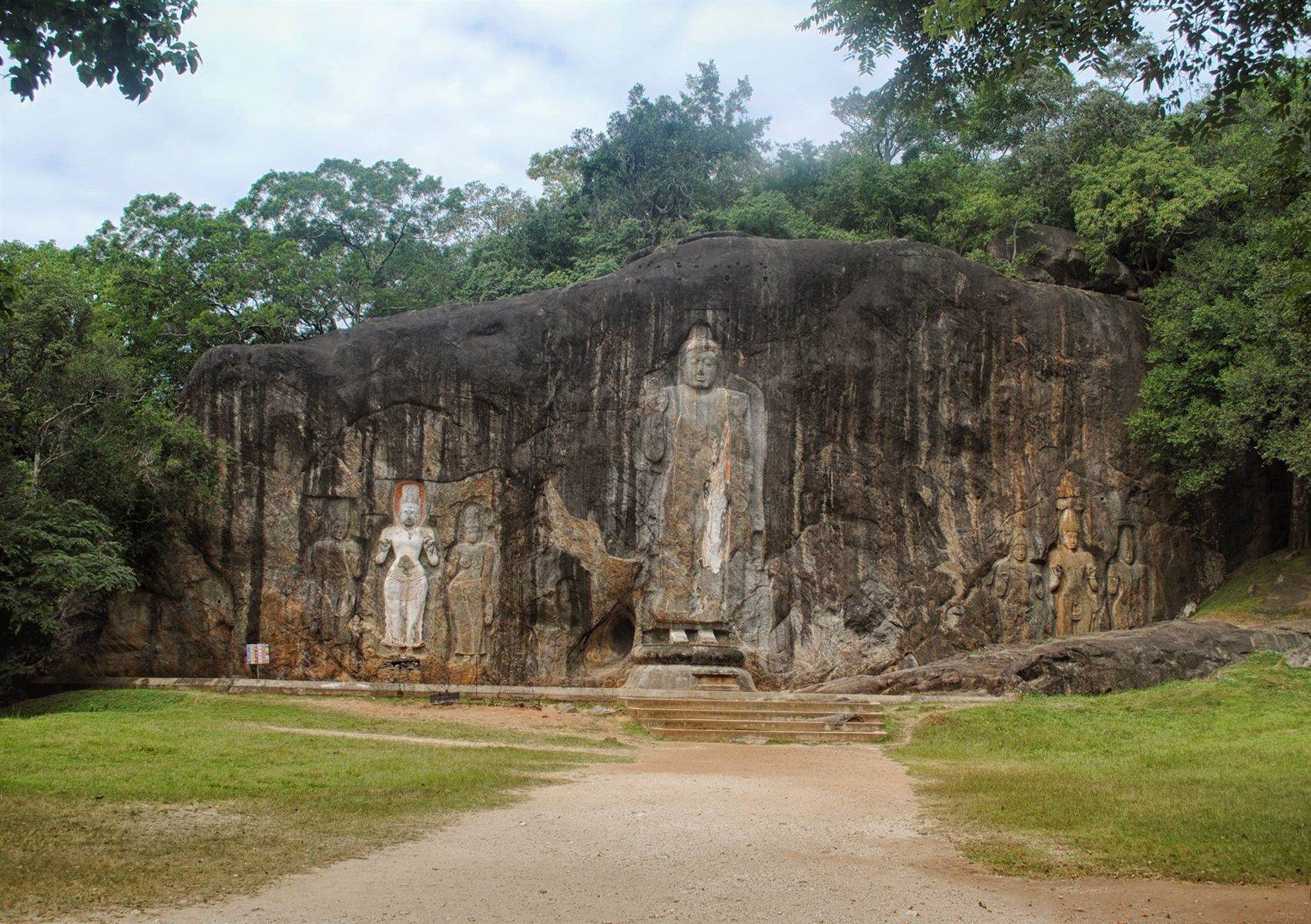
Seven figures carved in high relief into a rock face near Wellawaya, the central standing Buddha nearly sixteen metres tall — the largest on the island. The flanking figures are Mahāyāna bodhisattvas, including Avalokiteśvara and Tārā, which makes this rare evidence of a Mahāyāna presence in a country that became firmly Theravāda. Traces of the original stucco and orange pigment survive on the Buddha's robe.

Uva Province16 m reliefAvailable as an addition

Mulkirigala Rock Temple

A rock rising two hundred metres out of the coconut country north of Tangalle, with cave shrines on five terraces reached by successive flights of steps. Its real claim is textual: it was in the library here that George Turnour found the Sinhala commentary that allowed him to translate the Mahāvaṃsa in the 1820s, which is the reason the chronicle history of this island is readable at all.

Southern ProvinceMahāvaṃsa keyAvailable as an addition
Waypoints HOW YOU GET BETWEEN THEM

The practical geography

Bandaranaike International Airport (CMB) is at Katunayake, thirty-five kilometres north of Colombo and about forty minutes from Negombo. Almost every journey begins and ends here. Kelaniya is close enough that we usually fit it in on the way somewhere.

Colombo is not a pilgrimage site, but Gangaramaya and Kelaniya are both here and it is where the Colombo–Jaffna and Colombo–Badulla lines start. The hill-country train from Kandy is worth taking as travel rather than as a sight.

Trincomalee on the east coast is the base for Seruwila and for the Koneswaram headland, and has one of the finest natural harbours in the world.

Galle in the south is a Dutch-period walled town rather than a Buddhist site, but it is the natural stop between Mulkirigala and Colombo.

Distances on this island are short and journey times are not. Ninety kilometres of hill road is three hours. Every itinerary on this site is built with real driving times rather than map distances, which is the main reason our days look emptier than you might expect.

Seasons, honestly
Best months by region
RegionBestAvoid
Cultural TriangleMay–SepOct–Dec
AnurādhapuraMay–SepNov–Dec
Jaffna & northApr–SepNov–Jan
East coastApr–SepNov–Jan
Hill countryJan–AprOct–Nov
Śrī PādaDec–MayJun–Nov
South coastDec–AprMay–Jul

Two monsoons hit opposite sides of the island at opposite times, so there is no bad month for the whole country — only bad month-and-region combinations. Śrī Pāda is the one hard constraint: outside the marked season the summit shrine is closed.

Speak with us A PERSON, NOT A FORM

Want a route built around particular sites?

Tell us which of these you most want to stand in front of and we will draw a route around them rather than fitting you into one of ours.