North to Anurādhapura
Met at the airport and driven to Anurādhapura, four and a half hours north. Evening briefing on conduct and dress. Nothing else.
Airport transferAnurādhapura
A hunting party, a hill, and a question about mangoes. Eight days beginning at the exact place Buddhism entered this island in about 247 BCE.
Prices are not published yet — every journey is quoted for your dates and group size.
In about 247 BCE — 236 years after the Buddha's parinibbāna, by the reckoning of the chronicles — King Devānampiya Tissa was hunting elk on the hill of Missaka Pabbata when he met a shaven-headed stranger. The stranger was Mahinda, son of the emperor Asoka, and he asked the king a series of questions about a mango tree — are there other mangoes, are there other trees, is there anything beside you and this tree — to establish whether the king could reason by inference. Satisfied, he taught him the Dhamma.
That is the founding scene of Sri Lankan Buddhism, and the hill is now called Mihintale, "Mahinda's plateau". Everything else on this journey grew out of that morning: the monastic city of Anurādhapura below, the forest hermitages of monks who wanted less of it, and eventually the painted caves at Dambulla.
We begin at the hill rather than saving it for later, because the rest only makes sense afterwards.
Met at the airport and driven to Anurādhapura, four and a half hours north. Evening briefing on conduct and dress. Nothing else.
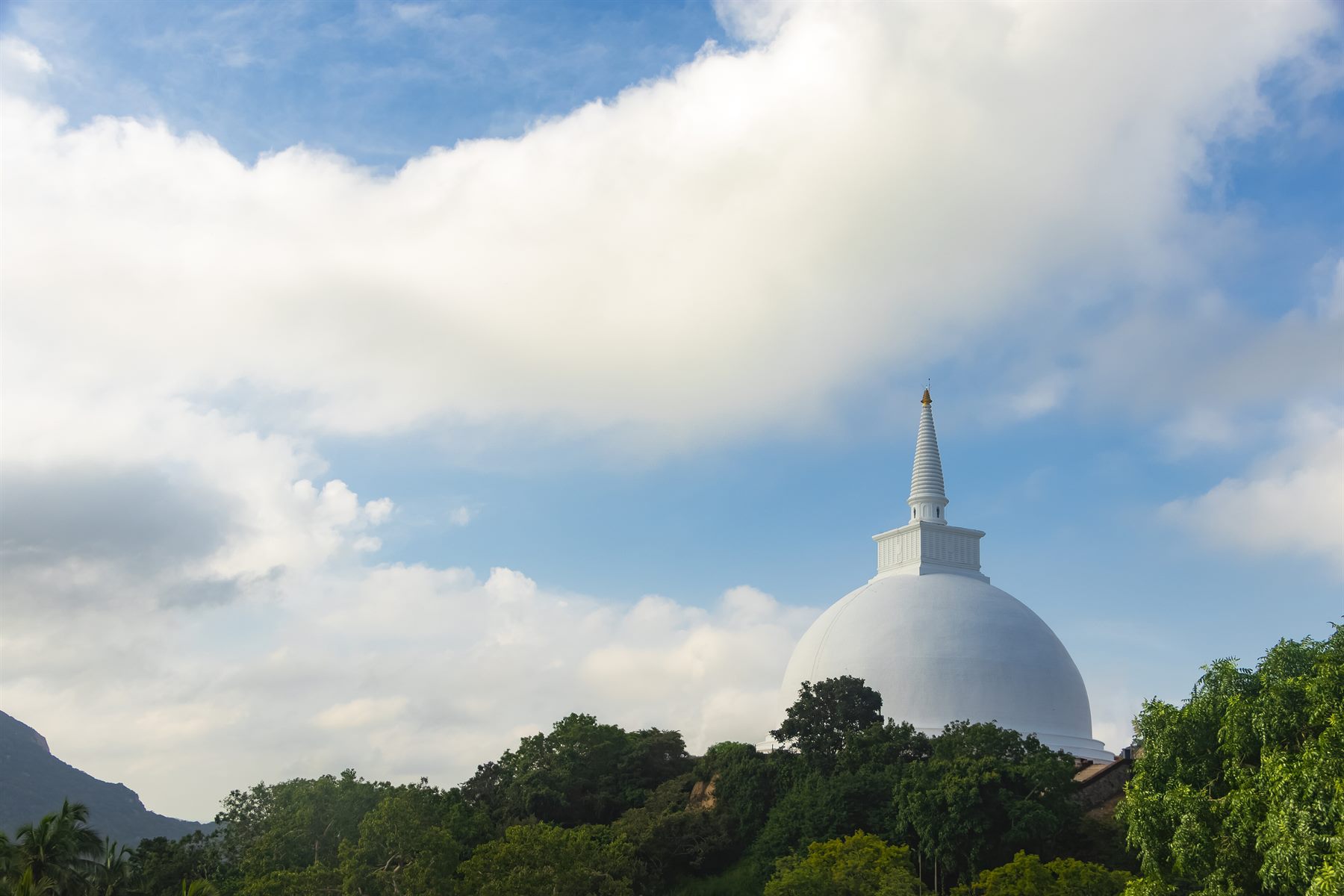
Out early for the 1,840 granite steps, which rise in broad shallow flights through the ruins of the monastery that grew on the hill. At the top: the Ambasthala Dāgaba, built where the king and Mahinda met, the Mahinda Guhāva where he is said to have slept, and the summit rock with the Sela Cetiya — the fifteenth of the sixteen sacred places.
On the lower terraces, the Kaludiya Pokuna forest monastery with its rock-cut bathhouse, and the ruins of what is often described as the oldest hospital in the world — including the stone beheth oruwa, a medicinal immersion trough carved to the shape of a body.
Jaya Sri Mahā Bodhi before five, for the chanting — the tree grown from a cutting of the Bodh Gayā tree, brought by the bhikkhunī Saṅghamittā and tended continuously since the third century BCE. Then Thūpārāmaya, the island's first stūpa. Late afternoon at Ruwanwelisāya.
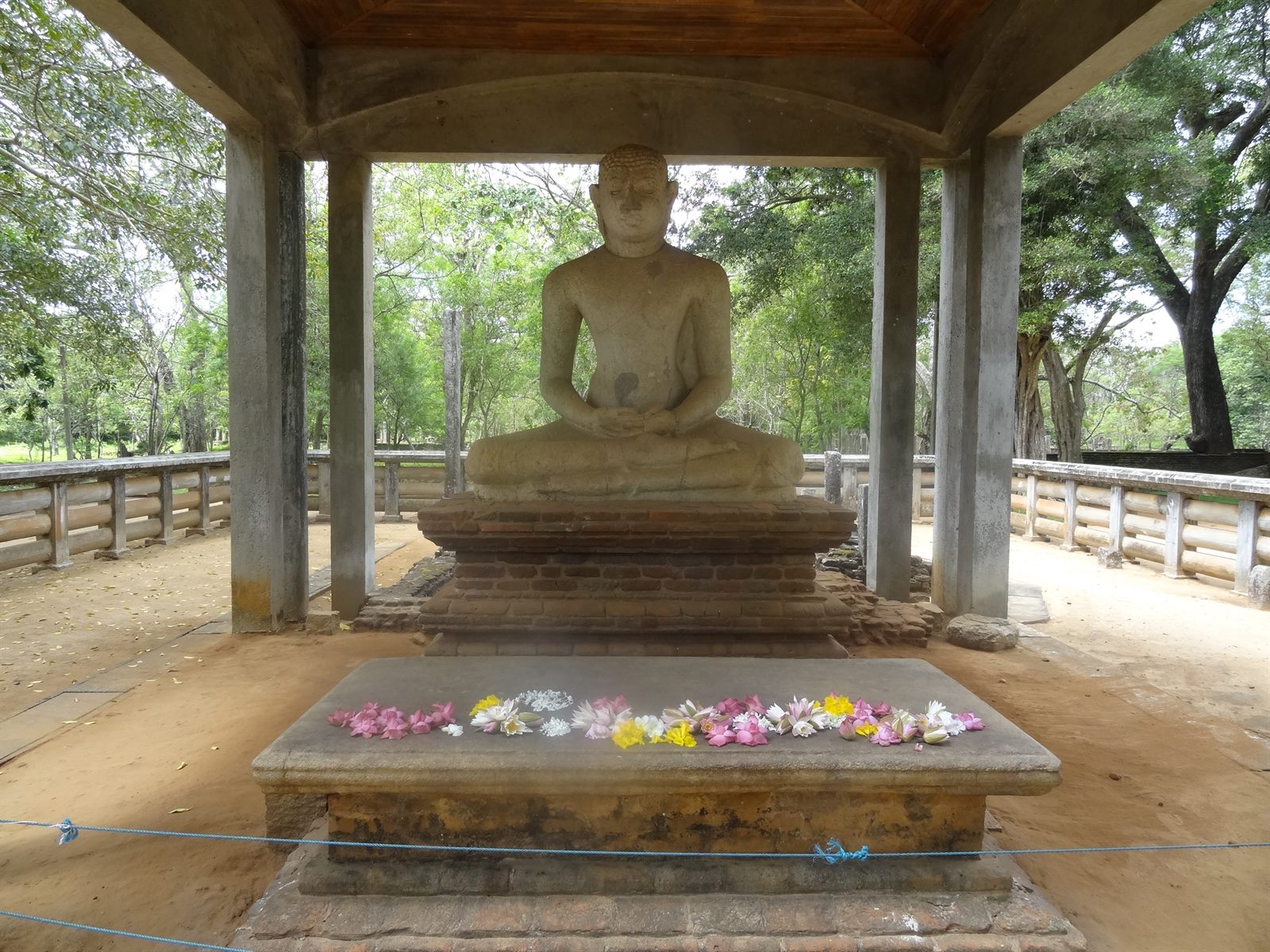
A morning in the Abhayagiri complex — five thousand monks at its height — with the Samādhi Buddha, the twin ponds of Kuttam Pokuna and their surviving filtration chambers, and the Sandakaḍa Pahaṇa moonstone with its concentric bands of flame, elephant, horse, lion, bull and lotus. Afternoon at Jetavanārāmaya.
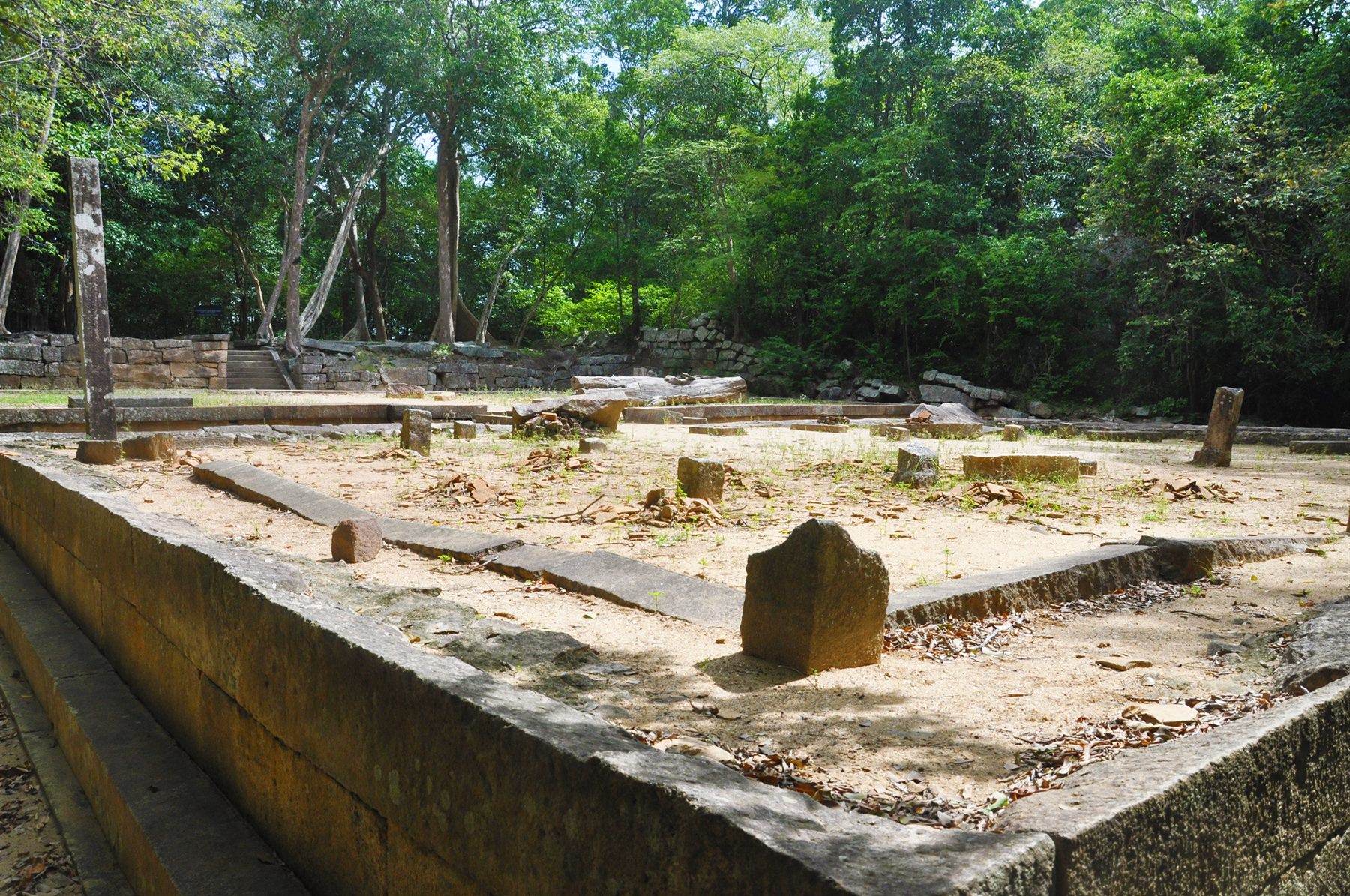
Out to Ritigala, a mountain ridge rising 600 metres out of flat dry-zone scrub, where the Pansukūlika — the rag-robe ascetics who rejected the wealth of the great city monasteries — built a hermitage of long straight meditation walkways, stone platforms and double-platform cells. It is inside a strict nature reserve, it is almost always empty, and it is the counterweight to everything you saw in Anurādhapura.
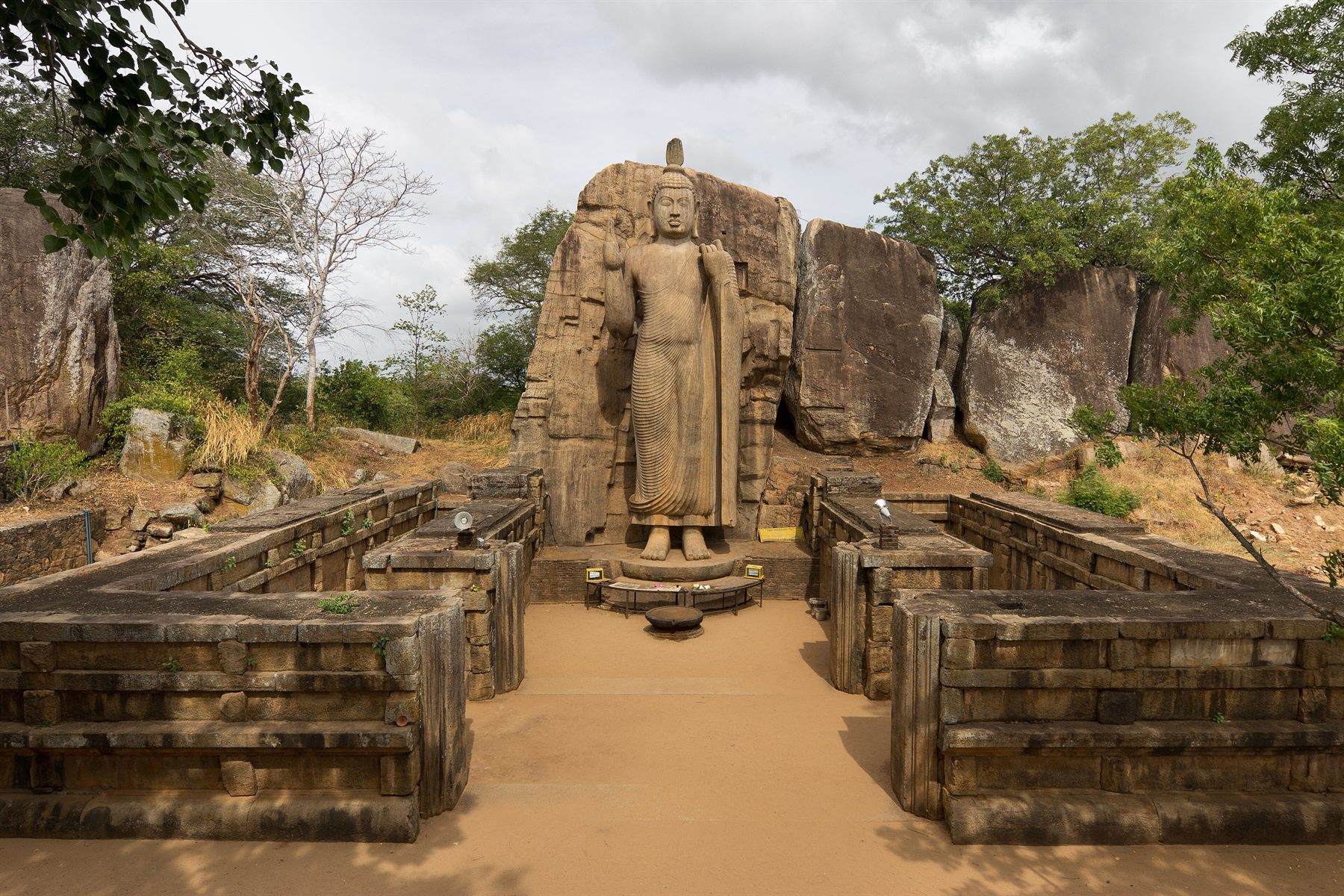
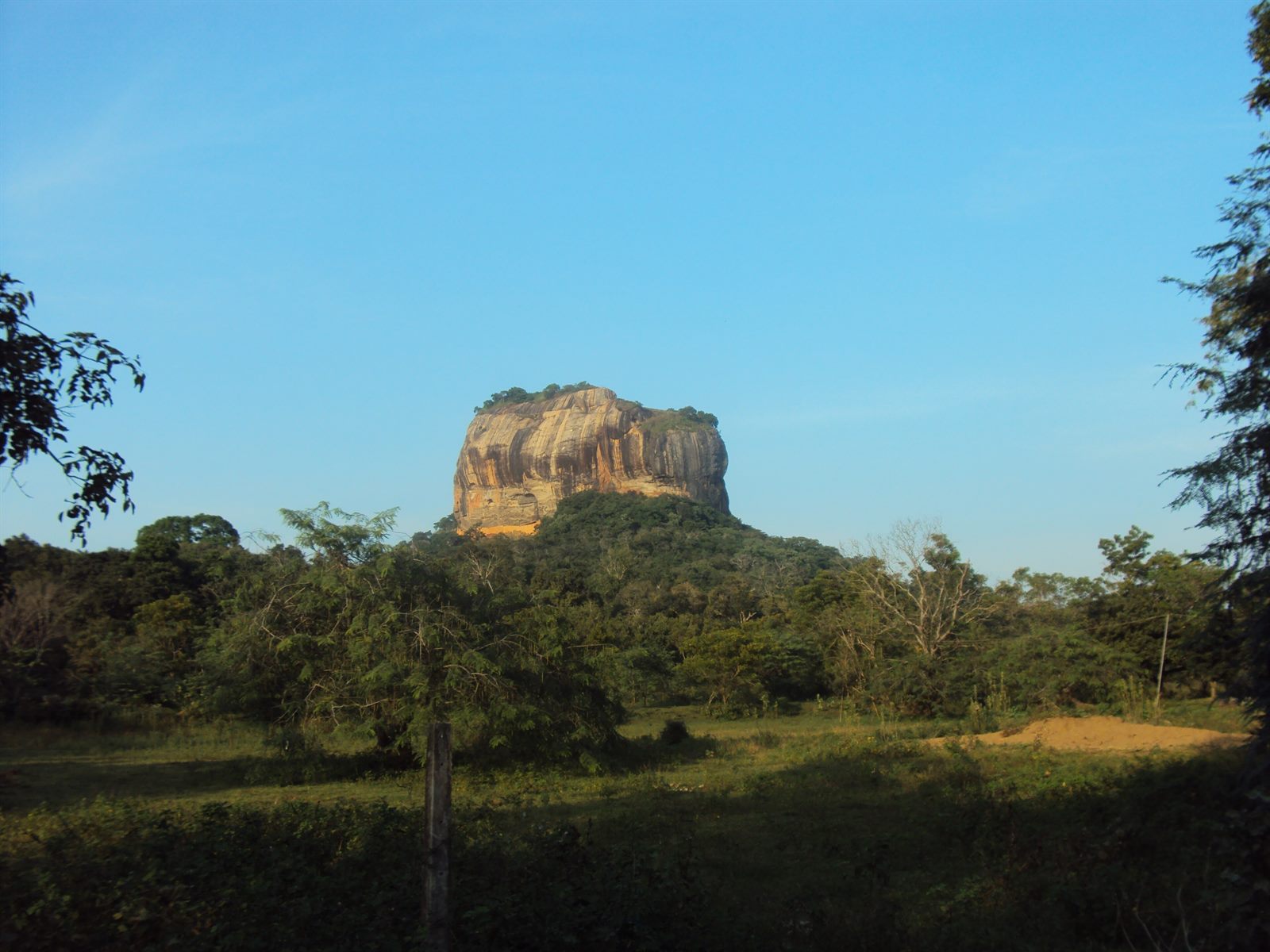
Afternoon: Aukana, where a twelve-metre standing Buddha in abhaya mudrā was cut from a single face of living granite, still joined to the rock behind it. Night at Sīgiriya.
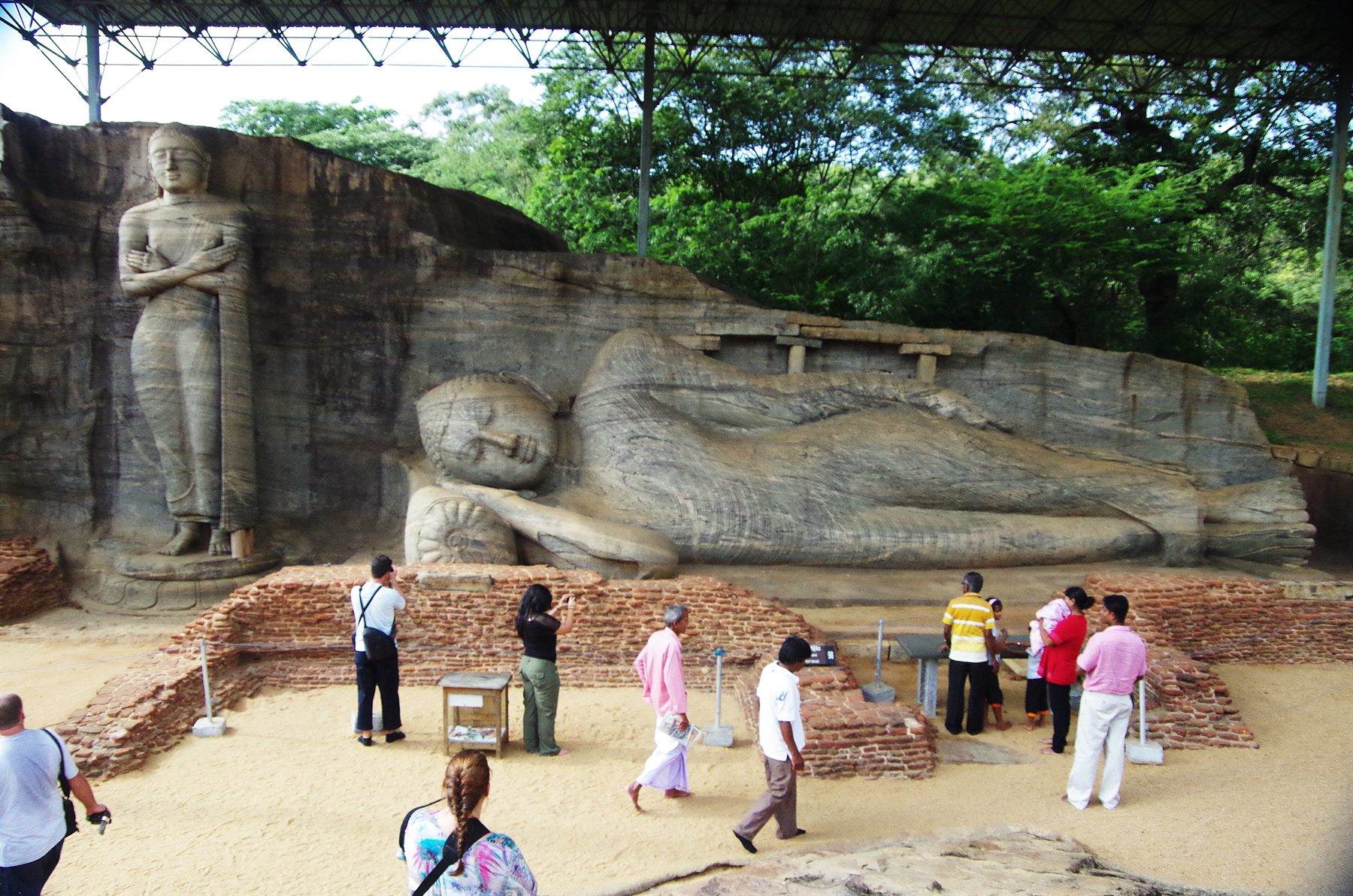
East to Polonnaruwa, the second capital: the quadrangle, the Vatadāge, the Lankātilaka, and then Gal Vihāra, where four twelfth-century figures — seated, standing, and a seven-metre reclining Buddha entering parinibbāna — were cut from one continuous face of granite. It is the best sculpture in the country and it is out in the open air.
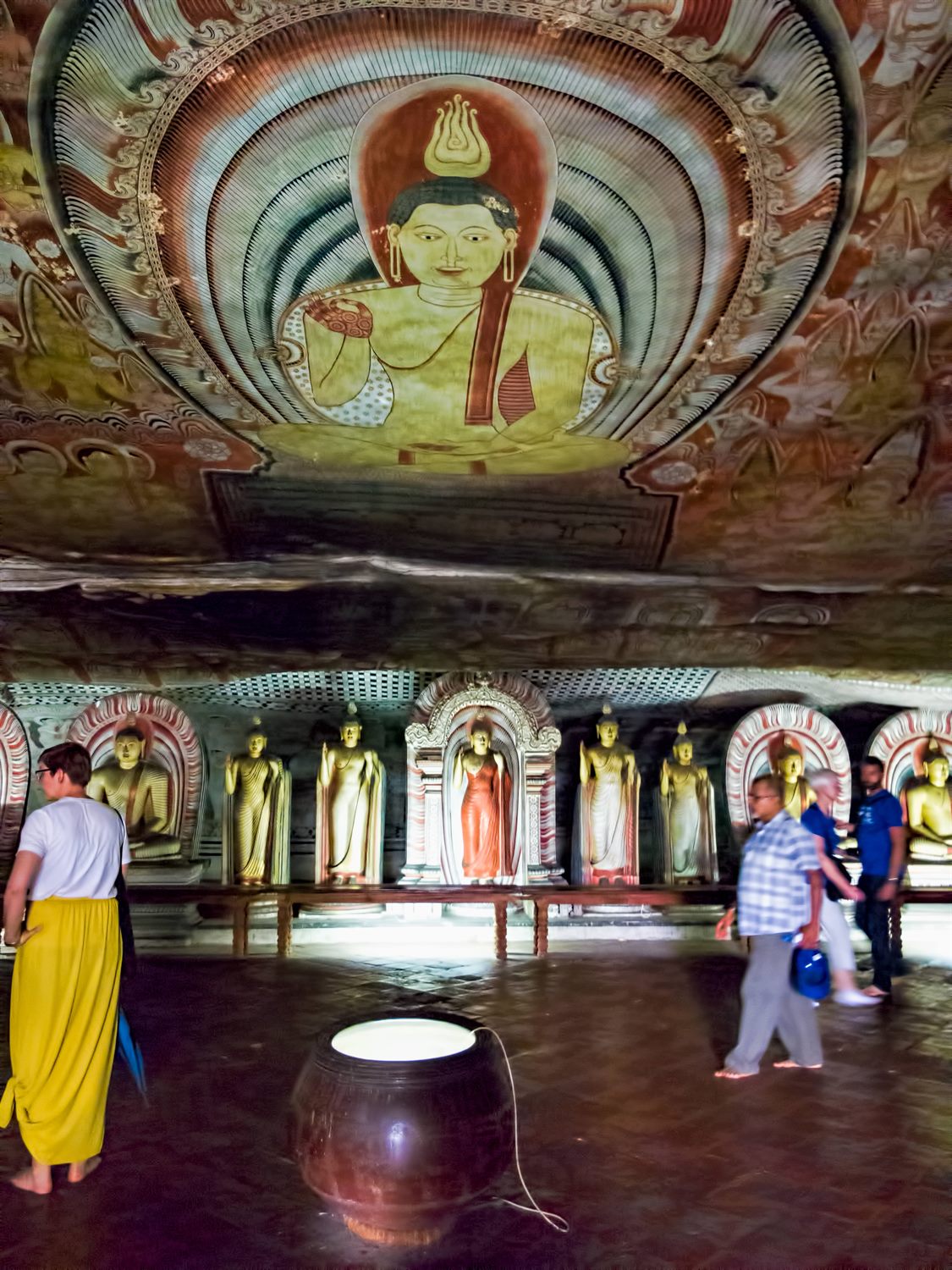
Raṅgiri Dambulla: five caves under a granite overhang, in continuous use as a monastery for twenty-two centuries, holding some 150 statues — 153 of them images of the Buddha — and around 2,100 square metres of painting applied directly to the rock — the ceiling of Cave 2 following every contour of the stone above your head. Then the climb up Pidurangala or a walk at the base of Sīgiriya, and on to Kandy.
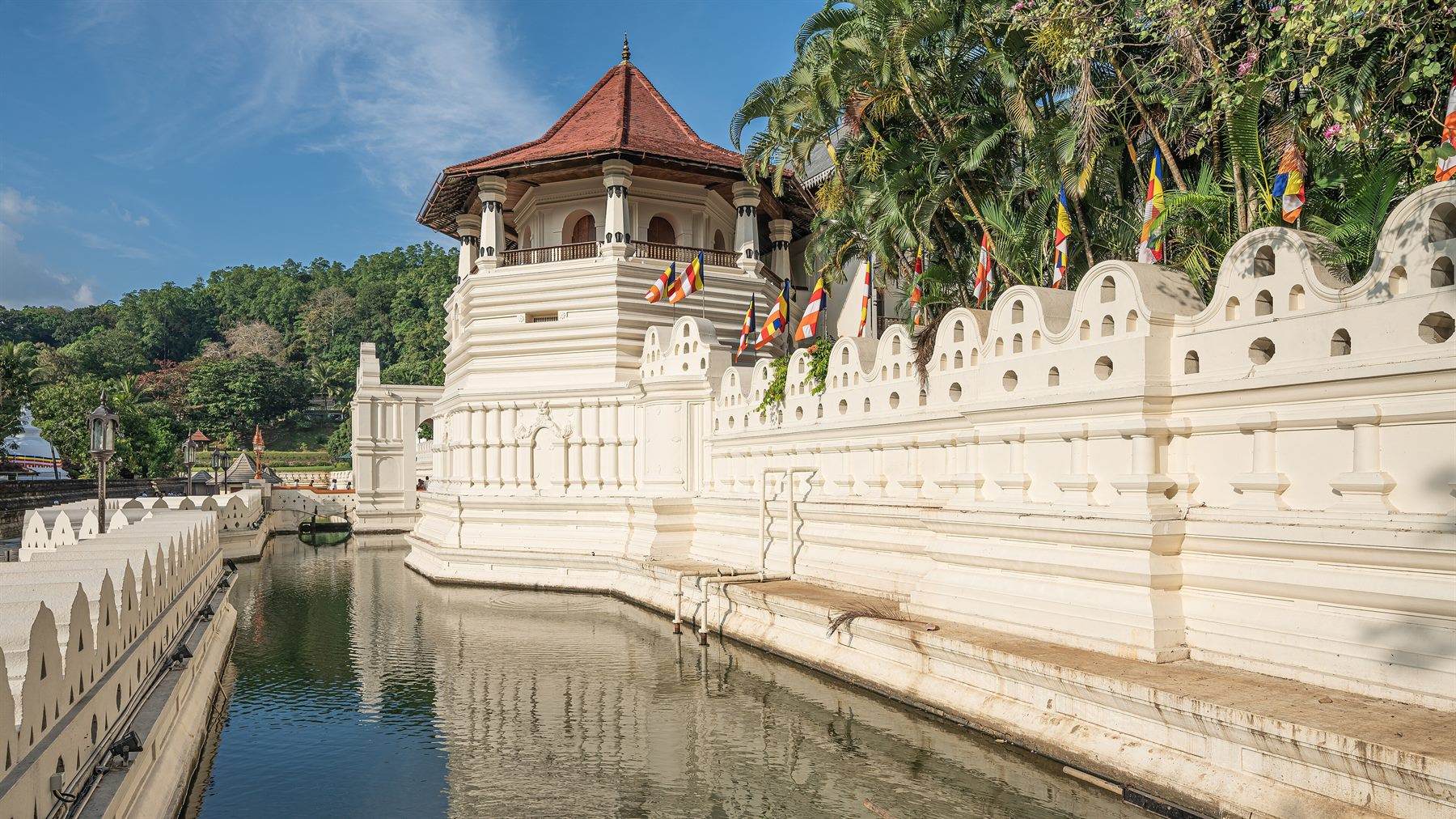
The morning Thevāva pūjā at the Sri Dalada Māligāwa, where the tooth relic of the Buddha has been kept since the sixteenth century and where drummers still announce the opening of the inner shrine three times a day. Then the drive to the airport.
The 1,840 steps at Mihintale are broad and gradual but there are a lot of them, and they are climbed barefoot from the ticket gate. Ritigala involves about ninety minutes of uneven walking.
The dry zone is at its best between May and September, when the rest of the island is wet. Tell us your dates and we will tell you what the weather will actually be doing.